
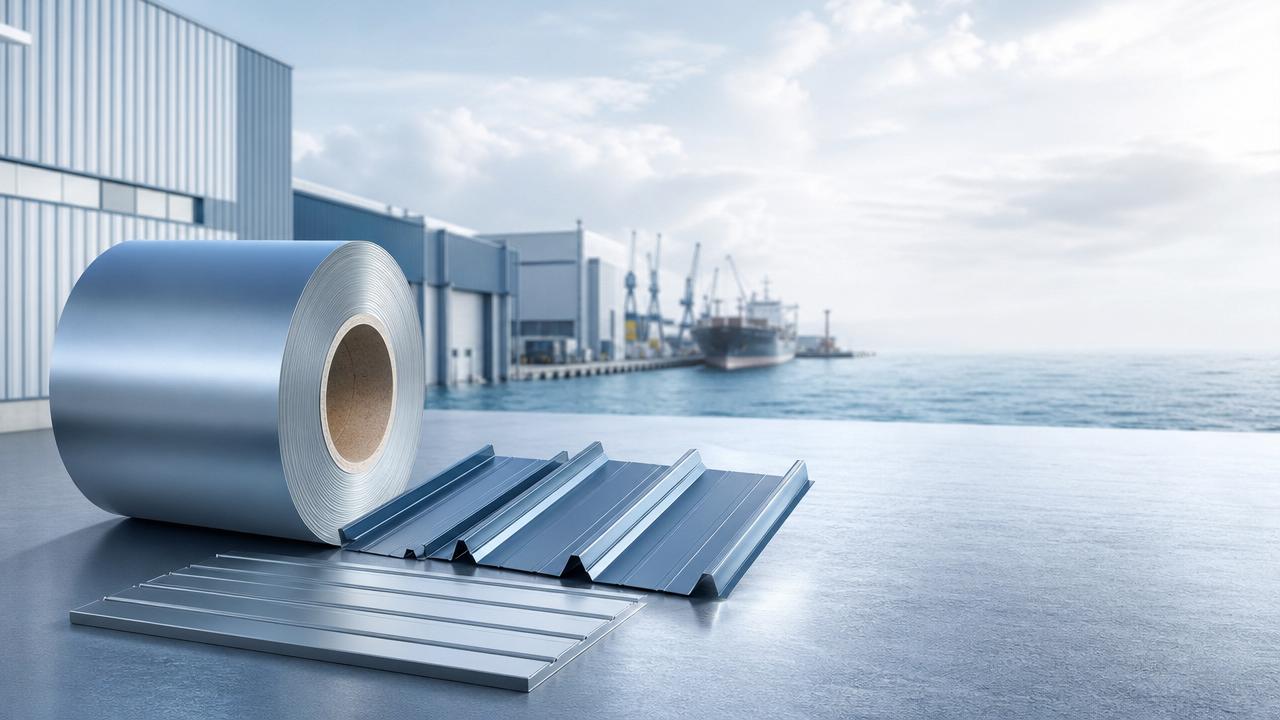
Fluorocarbon prepainted galvanized coil is used where steel must stay reliable in salt-laden air, chemical exposure, heavy rain, and strong sunlight. In coastal and industrial construction, appearance matters, but durability matters more. That is why this coated steel is often selected for roofing, wall systems, enclosures, and fabricated building parts that need long service life with less frequent maintenance.
Compared with standard painted steel, it combines a galvanized substrate with a fluorocarbon top coating, usually based on PVDF technology. This combination helps the material resist corrosion, chalking, fading, and surface breakdown. For projects near the sea, ports, factories, or processing plants, that performance can directly affect lifecycle cost and replacement planning.
Why this material draws attention in demanding environments
Steel structures in coastal and industrial zones face a harsher operating reality than inland buildings. Salt mist settles on exposed surfaces. Moisture remains longer. Industrial emissions may carry acids, alkalis, or fine particles that accelerate coating failure.
Under those conditions, ordinary painted sheet can lose gloss, fade, or corrode earlier than expected. Fluorocarbon prepainted galvanized coil is designed to slow that process. It protects both the visual finish and the steel beneath it.
This is especially relevant in steel construction, where envelope materials are exposed every day. A roof or wall panel that performs well for years reduces shutdowns, patch repairs, and premature replacement.
What fluorocarbon prepainted galvanized coil actually means
The product starts with galvanized steel coil. The zinc layer protects the base steel through barrier protection and sacrificial action. On top of that, manufacturers apply pretreatment, primer, and a fluorocarbon finish coat.
In practical terms, the fluorocarbon layer is the main reason this material is chosen for harsh exterior use. It is known for strong weather resistance, color retention, and lower surface degradation over time.
That does not mean every product performs the same way. Coating thickness, zinc mass, paint system, curing quality, and forming requirements all influence the final result. The name suggests a category, not a single uniform grade.
Core performance features
- Good resistance to salt spray and humid marine air.
- Better UV durability than many conventional paint systems.
- Stable color and gloss retention on exposed facades.
- A smoother surface suitable for visible building exteriors.
- Protection for formed steel parts used in long-span buildings.
Where it is commonly used in coastal projects
In coastal development, the first concern is usually corrosion. Sea air can reach far inland, and exposed steel cladding often ages faster than expected. Fluorocarbon prepainted galvanized coil is commonly used where exterior surfaces remain open to wind, rain, and airborne salt.
Roofing and wall cladding
This is one of the most typical applications. Roof sheets and wall panels made from fluorocarbon prepainted galvanized coil can hold color and surface integrity longer in marine climates.
For resorts, terminals, workshops, storage buildings, and transport hubs near the coast, that balance of durability and appearance is often a deciding factor.
Marine-adjacent service buildings
Utility rooms, port-side warehouses, maintenance sheds, and support buildings often use prepainted steel because it is efficient to fabricate and install. In these areas, the fluorocarbon coating helps reduce visible aging on exposed surfaces.
Canopies, fascia, trim, and exposed accessories
Smaller architectural parts are easy to overlook, yet they often weather first. Edge trim, parapet covers, canopy skins, and fascia panels benefit from the added weather resistance of fluorocarbon prepainted galvanized coil.
How industrial facilities use it
Industrial projects create a different but equally severe exposure profile. The issue may be less about sea salt and more about fumes, temperature variation, moisture retention, washdown cycles, or airborne contaminants.
In those settings, Fluorocarbon prepainted galvanized coil is often chosen for external envelope systems and selected semi-exposed components. It is not a universal answer for every chemical environment, but it performs well in many common industrial applications.
It is also used for sandwich panel skins, roll-formed sections, shutters, partition exteriors, and fabricated steel accessories where a stronger outdoor coating system is preferred.
The value goes beyond corrosion resistance
The most obvious advantage is longer protection in harsh environments, but project value is broader than that. A durable finish can support cleaner building appearance, fewer recoating cycles, and more predictable maintenance budgets.
In large steel buildings, surface deterioration rarely stays cosmetic for long. Once the coating weakens, moisture and contaminants can move closer to the substrate. The cost then shifts from routine upkeep to corrective repair.
For visible commercial-industrial buildings, fluorocarbon prepainted galvanized coil also helps preserve facade consistency. That matters when projects need a professional exterior over many years, not only at handover.
What to check before selecting a specification
Selecting the right coil means matching the coating system to the actual exposure level. A coastal warehouse, a fertilizer facility, and a food processing plant may all require different specifications.
Looking only at the product name is not enough. The decision should include several technical details that affect service life and fabrication performance.
Key evaluation points
- Galvanized coating weight and substrate grade.
- Primer and topcoat thickness, especially for exterior use.
- Whether the coating system is PVDF-based or another fluorocarbon formulation.
- Expected forming radius for roofing sheets, panels, or trims.
- Local exposure conditions, including salt spray, emissions, and humidity.
- Cut-edge protection strategy and installation detailing.
Simple detailing choices also matter. Water traps, poor drainage, dissimilar metal contact, and unsealed cut edges can shorten the life of any coated steel product, including fluorocarbon prepainted galvanized coil.
Common misunderstandings in real projects
One common assumption is that a higher-grade topcoat solves every corrosion issue. In reality, the steel substrate, zinc layer, installation method, and maintenance plan all work together.
Another misunderstanding is using the same specification for both inland and marine exposure. A coil suitable for a dry urban warehouse may not perform the same way beside a coastline or an aggressive industrial process area.
There is also a tendency to compare price without comparing lifecycle value. A lower initial cost can become expensive if repainting, replacement panels, or corrosion-related shutdowns appear earlier than planned.
How to interpret suitability for a project
A practical way to judge suitability is to start with exposure severity, expected design life, and visual requirements. Then compare coil options by substrate protection, topcoat performance, and forming compatibility.
If the application includes roof panels, wall systems, flashings, and accessories, it helps to review them as one envelope package. The best result usually comes from aligning coatings across connected components.
For projects with uncertain exposure conditions, requesting test data, coating details, and use-case references is more useful than relying on generic descriptions. That creates a clearer basis for comparison.
A practical next step
Fluorocarbon prepainted galvanized coil is mainly used where steel building surfaces must resist corrosion, keep their finish, and remain serviceable in coastal or industrial conditions. Its typical uses include roofing, wall cladding, warehouses, factories, marine-adjacent buildings, and exposed fabricated components.
The most useful next step is to define the environment first, then compare coil specifications against that reality. Once exposure level, design life, and fabrication needs are clear, it becomes easier to judge whether fluorocarbon prepainted galvanized coil is the right fit for the project.
Get real-time quotes
Interested? Leave your contact details.