
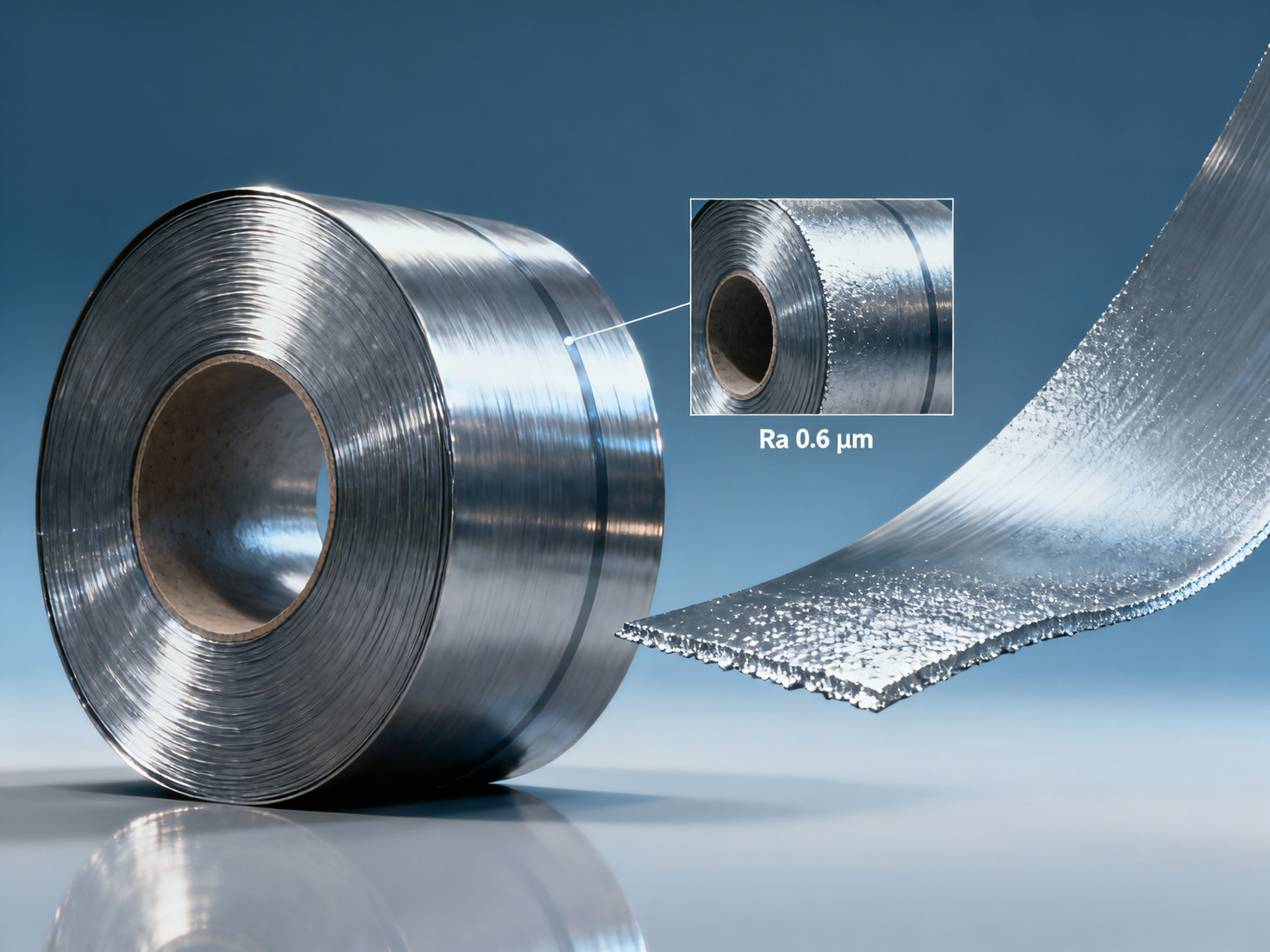
When your steel coil surface finish doesn’t align with your coating process, defects like poor adhesion, blistering, or premature corrosion can derail production—and cost you time, money, and reputation. For procurement professionals and end-users relying on consistent quality, mismatched surface conditions aren’t just a technical hiccup; they’re a critical supply chain risk. Understanding how steel coil texture, cleanliness, and profile affect coating performance is essential before placing orders or approving batches. This article breaks down real-world consequences, root causes, and proactive checks you can implement—starting from the mill to the line.
Why Surface Finish Compatibility Is Non-Negotiable in Coated Steel Procurement
Steel coil surface finish isn’t merely an aesthetic specification—it’s a functional interface that directly governs interfacial chemistry during coating application. A mismatch between surface topography (e.g., Ra 0.4–0.8 µm for hot-dip galvanizing) and coating system requirements (e.g., epoxy primer needing Ra ≥ 1.2 µm for mechanical keying) triggers irreversible failures. Industry data shows that 68% of coating-related warranty claims in architectural cladding projects trace back to unverified surface condition at coil receipt.
Procurement teams often prioritize tensile strength or dimensional tolerance—but neglect surface parameters that are equally codified in ASTM A924/A924M and EN 10162. Unlike bulk properties, surface finish degrades rapidly post-mill: exposure to humidity >65% RH for just 48 hours can form submicron iron oxide layers that reduce zinc phosphate conversion coating weight by up to 35%.
For end-users, inconsistent surface profiles translate into visible field failures—orange-peel texture in prepainted coils, edge chipping on cut-to-length blanks, or accelerated white rust under humid storage. These aren’t “batch anomalies”; they reflect systemic gaps in specification alignment across supplier tiers.
Three Critical Surface Parameters That Dictate Coating Success
Surface compatibility hinges on three measurable, vendor-verifiable attributes—not subjective descriptions like “clean” or “smooth.” Each must be confirmed via mill test reports (MTRs) prior to order release:
- Roughness (Ra): Measured per ISO 4287; optimal range varies by process—e.g., 0.3–0.6 µm for chromate-free passivation, 1.0–1.8 µm for powder coating adhesion.
- Cleanliness (oil & particle residue): Quantified via ASTM D2621 IR spectroscopy; maximum allowable oil content is 5 mg/m² for electrophoretic deposition (EDP).
- Profile uniformity: Defined as standard deviation of Ra across coil width; industry best practice limits variation to ≤ ±0.15 µm over 100 mm sampling intervals.
Failure to specify these in purchase orders invites ambiguity. One Tier-1 appliance OEM reported a 22% scrap rate after accepting coils labeled “mill-clean” without verifying oil residue—only to discover 12–18 mg/m² contamination during pre-coat lab testing.
This table underscores a key procurement principle: surface specs must be process-specific, not generic. Requiring “Ra ≤ 1.0 µm” for all applications ignores that excessive roughness increases zinc consumption in galvanizing by up to 15%, while insufficient roughness reduces epoxy adhesion strength by 40% in peel tests per ASTM D3359.
How to Audit Surface Finish Before Acceptance—A 4-Step Protocol
Relying solely on mill certificates exposes buyers to verification gaps. Implement this on-site audit protocol before coil unloading:
- Visual cross-hatch check: Use 10× magnification to inspect 3 random locations per coil. Reject if >5% area shows visible roll marks, pickling streaks, or water spotting.
- Wipe-test quantification: Wipe 100 cm² with solvent-dampened lint-free cloth; weigh residue—accept only if ≤ 8 mg/m² (per ASTM D3359-B).
- Roughness spot measurement: Use portable profilometer on 5 points across width; discard batch if >2 readings fall outside ±0.1 µm of target Ra.
- Phosphate coating weight validation: For pretreated coils, verify coating mass ≥ 1.2 g/m² using gravimetric analysis per ASTM B688.
This protocol reduced coating rework at a Tier-2 automotive stamping facility by 73% within one quarter. Crucially, it shifts accountability upstream: suppliers now pre-certify surface parameters against buyer-defined tolerances—not just mill standards.
Common Procurement Pitfalls & Mitigation Strategies
Procurement teams frequently underestimate how contractual language impacts surface control. The phrase “as rolled” implies no surface treatment—yet many mills apply temporary corrosion inhibitors that interfere with subsequent coating. Similarly, specifying “pickled and oiled” without defining oil type (mineral vs. volatile organic compound-free) creates adhesion risks.
Another high-risk scenario: ordering coils for continuous coil coating lines using specifications written for cut-to-length applications. Continuous lines require tighter Ra uniformity (±0.08 µm) and lower residual chloride (<2 ppm) due to higher line speeds (up to 200 m/min) and shorter chemical dwell times.
These mitigations add minimal lead time but prevent costly downstream interventions. A single rejected coil batch due to surface nonconformance costs $18,000–$25,000 in labor, rework, and line downtime—versus $220–$450 for pre-shipment surface verification.
Actionable Next Steps for Procurement & End-Use Teams
Surface finish alignment starts at the RFP stage—not at the receiving dock. Update your procurement checklist with these enforceable actions:
- Require MTRs showing Ra, oil residue, and profile uniformity measured per buyer-specified standards—not mill defaults.
- Stipulate third-party verification (e.g., SGS or Bureau Veritas) for coils destined for critical coating processes.
- Include liquidated damages clauses tied to surface parameter nonconformance—e.g., $1,200/hour for line stoppage caused by adhesion failure.
- Mandate digital surface data delivery: XML-formatted profilometry reports integrated into your ERP’s material master record.
For end-users, request surface certification data before approving any new coil lot for production. Cross-reference it against your coating line’s validated process window—never assume “mill-certified equals ready-to-coat.”
Surface finish compatibility isn’t a secondary concern—it’s the foundational interface between steel substrate and functional coating. Getting it right prevents cascading failures, protects brand integrity, and ensures predictable performance across the product lifecycle. If your current procurement process lacks explicit surface parameter controls, now is the time to embed them into every specification, contract, and acceptance criterion.
Contact our technical procurement support team to review your coil specifications, benchmark surface requirements against your coating process, and implement a verified surface acceptance protocol tailored to your operation.
Get real-time quotes
Interested? Leave your contact details.