
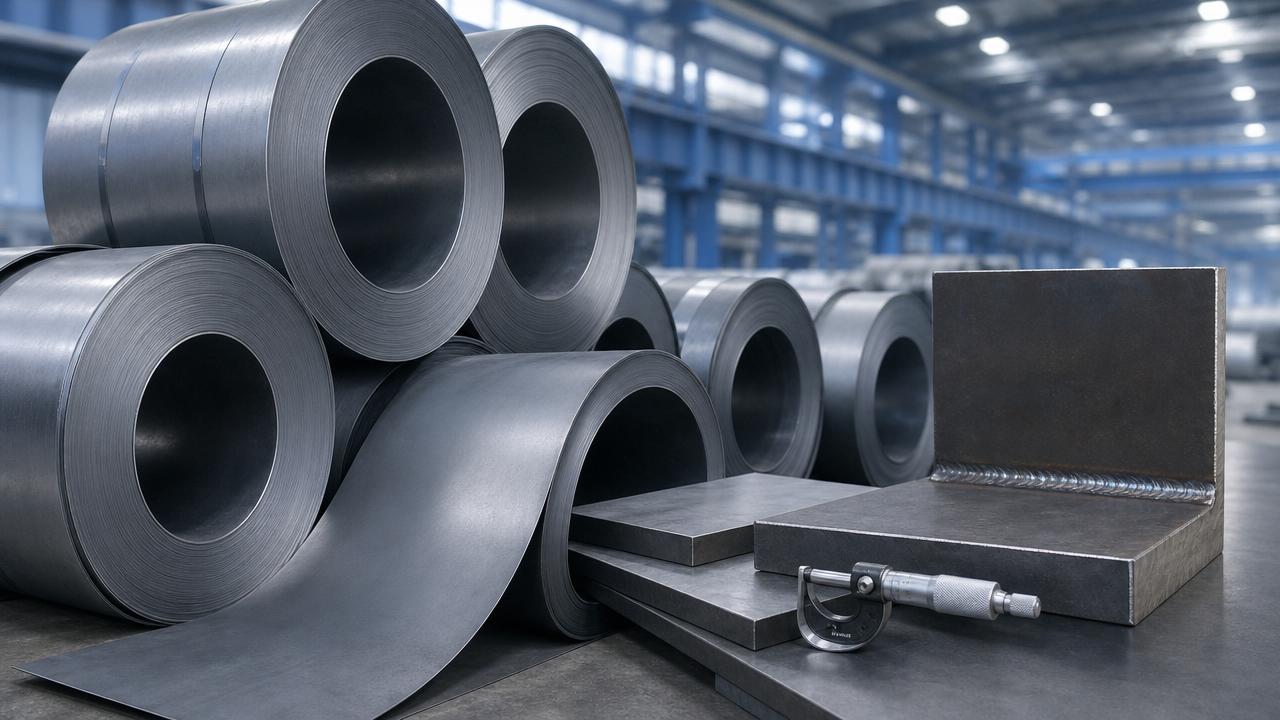
Selecting a Q355 low alloy carbon steel coil is rarely a simple grade match. In steel fabrication, the right choice depends on how strength, thickness, and weldability work together in real production conditions.
A drawing may specify Q355, yet forming limits, heat input, joint design, and downstream coating can still change the best option. That is why material evaluation needs to move beyond nominal mechanical values.
When the comparison is done carefully, a suitable Q355 low alloy carbon steel coil can improve consistency, reduce rework, and support more predictable structural performance across demanding applications.
What Q355 Means in Practical Terms
Q355 is a widely used low alloy structural steel grade known for balancing strength, toughness, and workable processing behavior. It sits above lower-strength carbon steel options in load-bearing capability.
For coil buyers, the name alone is only a starting point. A Q355 low alloy carbon steel coil may vary by delivery condition, chemical composition limits, thickness band, and impact toughness requirement.
In practice, the grade is often considered when a project needs better strength-to-weight efficiency without moving to a more expensive alloy system or a more difficult processing route.
This makes it relevant in structural parts, construction equipment, formed sections, transportation components, and general fabrication where both load capacity and manufacturability matter.
Why Selection Has Become More Sensitive
Steel projects now face tighter cost controls, shorter production windows, and higher reliability expectations. A small material mismatch can create delays through cracking, distortion, or unstable forming results.
More attention is also being paid to actual service conditions. Static strength is important, but it is not enough when welded assemblies face low temperatures, vibration, or repeated loading.
As a result, the decision around Q355 low alloy carbon steel coil often includes a broader review of yield class, thickness tolerance, toughness level, and welding compatibility rather than price alone.
Strength Grades Are Only the First Filter
The core attraction of Q355 is its nominal yield strength level. Even so, the useful question is not simply whether the grade is strong enough, but whether the delivered coil supports the real design margin.
Yield strength, tensile strength, and elongation should be reviewed together. A higher measured strength can look attractive, yet excessive hardness or reduced ductility may complicate bending and welding.
Subgrades or condition-related differences can also matter. Toughness requirements at different temperatures may separate one Q355 low alloy carbon steel coil option from another, especially in outdoor structures.
A practical strength review should include
- Minimum yield strength against actual section stress, not only nominal drawing values.
- Tensile range and elongation for forming, flanging, and hole expansion behavior.
- Impact toughness level if the structure sees low ambient temperature.
- Consistency across coil lots, especially for repeat production.
In other words, strength grade screens the shortlist, but final selection should reflect fabrication stability and service reliability, not a single line in the specification sheet.
Thickness Changes More Than Section Weight
Thickness is often discussed in terms of weight and cost, but its influence is wider. It affects forming force, springback, weld penetration control, flatness expectations, and even coating behavior.
Thin-gauge Q355 low alloy carbon steel coil may support lighter structures and faster shaping, yet tight dimensional control becomes more important. Surface condition can also become more visible after forming.
At heavier gauges, strength is easier to retain in structural sections, but welding heat management becomes more demanding. Residual stress and distortion risks can rise during assembly.
Thickness-related questions worth checking
A thickness decision should therefore connect structural demand with processing capability. That balance usually creates more value than simply choosing the lowest possible gauge.
Welding Performance Deserves Early Attention
Weldability is one of the most important filters for Q355 low alloy carbon steel coil, especially when the material enters multi-pass welding, robotic lines, or outdoor erection work.
A coil may meet strength targets and still perform poorly if carbon equivalent is too high for the selected welding method. That can increase crack sensitivity in the heat-affected zone.
Joint geometry matters as well. Fillet welds, full penetration joints, and intermittent seams do not impose the same thermal demands. Plate thickness and restraint level change the risk profile.
What to review before approval
- Carbon equivalent or similar weldability indicator.
- Expected preheat needs for the intended thickness.
- Filler metal compatibility with target joint properties.
- Heat input window for distortion and toughness control.
- Surface condition if the coil will be welded without extensive cleaning.
In actual fabrication, welding performance often decides whether a Q355 low alloy carbon steel coil is efficient or troublesome. Early review helps avoid late-stage process compensation.
Common Application Patterns
Not every use case values the material in the same way. The selection logic changes with structural duty, forming complexity, and exposure conditions.
Formed structural members
Roll-formed or bent sections usually need a balance between strength retention and manageable springback. Here, consistency from coil to coil can be as important as nominal strength.
Welded frames and supports
Frames for machinery, transport units, and support structures often favor Q355 low alloy carbon steel coil because it supports moderate weight reduction without moving into exotic alloys.
Outdoor steel assemblies
When service temperature and weather exposure become more severe, toughness, coating preparation, and weld zone reliability require closer review than they do in indoor applications.
How to Compare Coil Options More Accurately
A useful evaluation method brings design, process, and quality requirements into one comparison. This prevents a material from looking suitable only because one parameter appears favorable.
For example, a lower-priced Q355 low alloy carbon steel coil may still increase total cost if it needs stricter preheat control, causes more forming variation, or creates extra leveling work.
A compact decision checklist
- Match mechanical properties to actual service loads and safety margins.
- Confirm thickness range and tolerances against line capability.
- Review weldability with realistic joint design and heat input.
- Check toughness, surface quality, and flatness requirements.
- Compare lot consistency, not just one inspection certificate.
- Estimate processing cost alongside raw material price.
This approach makes the assessment more dependable because it reflects how the steel will actually be cut, formed, welded, and used rather than how it looks on paper.
Where the Final Decision Usually Comes From
The best Q355 low alloy carbon steel coil is often not the strongest, thickest, or cheapest choice. It is the option that fits the intended process window with the least technical compromise.
That usually means linking mechanical targets with thickness tolerance, weld procedure assumptions, forming behavior, and service conditions before the material is approved for production.
A clear comparison sheet can help. Start with required strength and thickness, add welding constraints, then check toughness, dimensional stability, and supply consistency against the same baseline.
When those points are reviewed together, the decision becomes less reactive and more defensible. That is the most practical way to narrow Q355 low alloy carbon steel coil options before procurement or fabrication begins.
Get real-time quotes
Interested? Leave your contact details.