Polyester PPGI Color Coated Coil Buying Guide: Coating Thickness, Color Stability, and MOQ
Choosing the right Polyester PPGI color coated coil can directly affect product quality, project cost, and long-term performance.
Key factors like coating thickness, color stability, and MOQ often decide whether a supplier truly matches purchasing requirements.
This guide breaks down those points in practical terms.
The goal is simple: reduce sourcing risk, compare suppliers faster, and make better buying decisions in a competitive steel market.
Why Polyester PPGI Color Coated Coil Remains a Popular Buying Choice
Polyester PPGI color coated coil is widely used because it balances appearance, corrosion resistance, and cost.
Compared with premium coating systems, polyester usually offers a more accessible price.
That makes it suitable for roofing, wall panels, household appliances, ceiling systems, doors, and light industrial fabrication.
In real purchasing work, this also means better flexibility across different project budgets.
However, not every Polyester PPGI color coated coil performs the same, even when specifications look similar on paper.
What usually changes the final buying result
- Actual paint thickness versus nominal paint thickness
- Top coat and back coat structure
- Galvanized or galvalume substrate quality
- Outdoor exposure conditions and UV level
- Color consistency between production batches
- MOQ, lead time, and customization limits
A smart sourcing decision starts by checking those details early, not after samples are approved.
How to Evaluate Coating Thickness Without Guesswork
Coating thickness is one of the most important quality indicators for Polyester PPGI color coated coil.
It directly affects corrosion resistance, scratch resistance, appearance, and expected service life.
Many purchase issues begin when buyers only review total thickness and ignore paint system details.
Understand the basic thickness structure
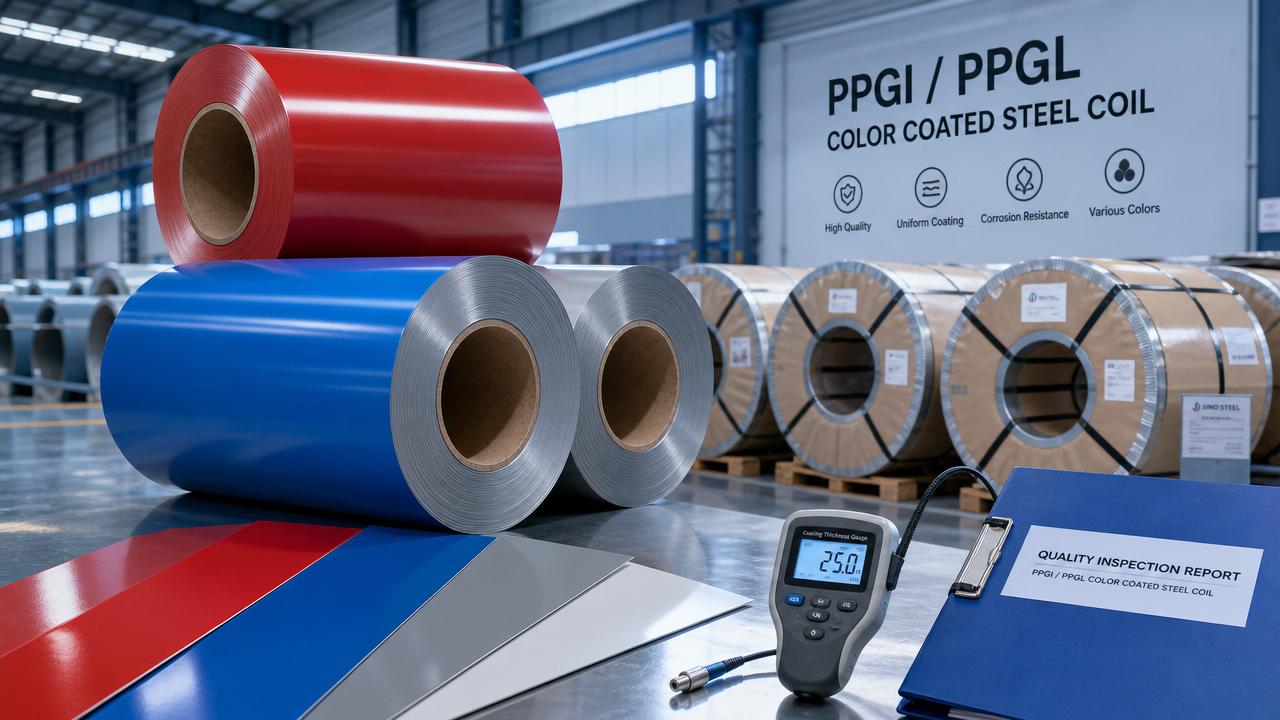
A typical Polyester PPGI color coated coil includes steel base metal, metallic coating, primer, top coat, and back coat.
When suppliers mention 10+5μm or 15+5μm, they usually mean top coat plus back coat paint thickness.
That number should not be confused with base steel thickness or total coil thickness.
Practical thickness benchmarks
A lower price often comes with thinner coating.
That may work for short-life or indoor use, but it increases risk in outdoor environments.
If the project requires forming, bending, or roll profiling, coating adhesion also matters as much as thickness.
Questions worth asking suppliers
- Is the quoted thickness nominal or minimum guaranteed?
- What test method is used for paint thickness control?
- Can batch inspection data be shared before shipment?
- Does the coating structure change by color or finish?
These questions usually reveal whether a supplier manages production carefully or only sells by headline price.
Color Stability Matters More Than Many Buyers Expect
For Polyester PPGI color coated coil, color stability is not just about appearance.
It affects project acceptance, brand consistency, and replacement cost later.
This becomes more critical when the material is used on visible building surfaces.
What causes poor color stability
- Low-grade pigments with weak UV resistance
- Unstable resin formula in the polyester coating
- Poor curing control during coating production
- Different raw material sources between batches
- Aggressive climate conditions during service
From a sourcing angle, the bigger risk is not immediate fading, but inconsistent batch performance over time.
How to check color consistency before ordering
Ask for the RAL code, gloss range, and tolerance standard in writing.
If possible, request both a sample sheet and a recent production batch photo under natural light.
For repeat orders, confirm that the same paint supplier and color formula will be maintained.
That step sounds small, but it often prevents visible mismatch on large installations.
When standard polyester may not be enough
If the project faces intense sunlight, coastal air, or longer service expectations, standard polyester may be limiting.
In that case, buyers should compare enhanced polyester systems or other premium coatings.
Still, for many commercial applications, a well-made Polyester PPGI color coated coil remains cost-effective and reliable.
How MOQ Affects Cost, Lead Time, and Supplier Flexibility
MOQ is often treated as a simple quantity issue, but it has a wider impact.
For Polyester PPGI color coated coil, MOQ can influence unit price, production schedule, packaging efficiency, and customization options.
Why MOQ varies between suppliers
Some suppliers stock common colors and thicknesses, so they can accept smaller trial orders.
Others produce mostly against orders, especially for custom RAL shades or non-standard widths.
This is why one supplier offers 25 tons minimum, while another asks for one full color batch.
MOQ trade-offs buyers should consider
- Lower MOQ usually means higher unit cost
- Custom colors often require larger MOQ
- Mixed sizes may extend delivery time
- Small orders may have limited packing choices
- Repeat business can improve MOQ terms later
In practical business, MOQ should be reviewed together with inventory turnover and project schedule.
A low MOQ is attractive, but not if it creates inconsistent quality across multiple small batches.
A better way to negotiate MOQ
Instead of asking only for the lowest MOQ, ask for flexible options.
For example, request shared color production, stock color substitution, or split shipment arrangements.
Those options can reduce financial pressure without sacrificing supplier cooperation.
A Practical Supplier Comparison Checklist
When comparing Polyester PPGI color coated coil suppliers, price alone rarely tells the full story.
A low quote may hide thinner coating, lighter zinc layer, weaker paint quality, or stricter claim limits.
A structured review helps prevent that.
This kind of checklist makes supplier comparison more objective and easier to explain internally.
Final Buying Advice for Better Procurement Decisions
Buying Polyester PPGI color coated coil is not only about finding a workable specification.
It is about matching coating performance, color reliability, and order quantity to the actual application.
From recent market changes, the clearer signal is that buyers need more control over specification details.
That also means generic quotations are no longer enough for confident purchasing decisions.
Before placing an order, confirm paint thickness, substrate coating, color tolerance, MOQ, and inspection terms in writing.
If several suppliers look similar, prioritize the one that answers technical questions clearly and consistently.
That usually indicates better process control behind the Polyester PPGI color coated coil being offered.
A careful review at the sourcing stage often saves far more than any small price difference later.
Use this guide as a working checklist, and each Polyester PPGI color coated coil purchase becomes easier to evaluate, compare, and approve.
Get real-time quotes
Interested? Leave your contact details.