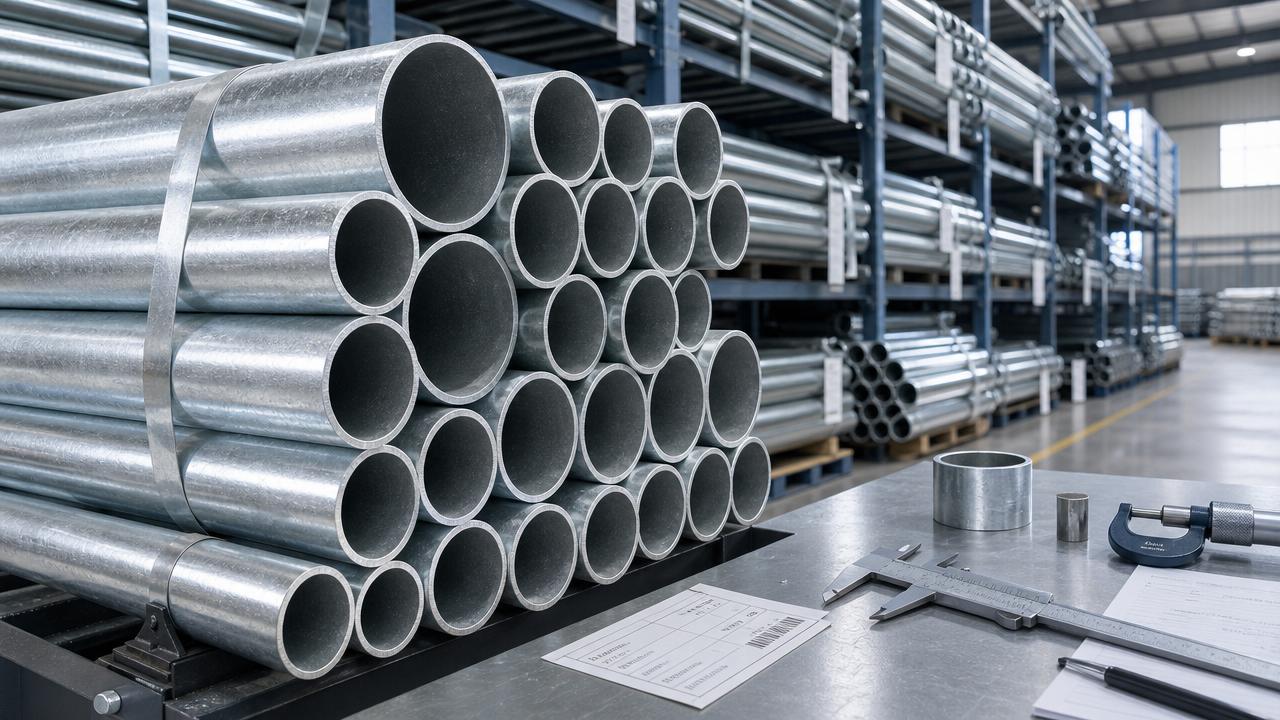
Galvanized Round Steel Pipe Procurement Checklist: Sizes, Standards, and Cost Drivers
Choosing the right galvanized round steel pipe involves more than comparing prices.
A smart purchase starts with fit, compliance, and supplier reliability.
In real sourcing work, the lowest quote can create the highest downstream cost.
That is especially true when galvanized round steel pipe must meet strict project, safety, or export requirements.
This checklist focuses on the practical factors that shape quality, compliance, and total landed cost.
It can help narrow options faster, compare suppliers more accurately, and reduce avoidable sourcing mistakes.
Start with the Application and Service Conditions
Before reviewing sizes or pricing, define where the galvanized round steel pipe will be used.
Outdoor fencing, scaffolding, fluid transport, fire systems, and structural frames often need different specifications.
A pipe suitable for light support may fail in a corrosive industrial setting.
This also affects coating expectations, wall thickness, and acceptable tolerances.
- Define the end use clearly.
- Check whether the pipe is structural, mechanical, or for fluid service.
- Confirm indoor, outdoor, coastal, or chemical exposure conditions.
- Match service life expectations with coating performance.
When this first step is skipped, galvanized round steel pipe sourcing becomes reactive, and comparison between offers loses meaning.
Confirm Size Requirements Before Asking for Quotes
Size is one of the main cost and usability drivers.
But many quote requests still mention only outside diameter.
That is not enough for accurate purchasing decisions.
For galvanized round steel pipe, buyers should confirm the full size set before requesting supplier pricing.
Core dimensions to verify
- Outside diameter, such as 21.3 mm, 48.3 mm, 60.3 mm, or larger.
- Wall thickness, which directly affects strength and weight.
- Pipe length, including fixed length or random length.
- End finish, such as plain end, threaded, or beveled.
- Weight tolerance and dimensional tolerance.
In practice, small thickness differences can change both performance and total order value.
Heavier galvanized round steel pipe increases material cost, freight cost, and handling cost.
Lighter pipe may reduce price, but can raise rejection risk if it misses the project standard.
Check Material Grade and Manufacturing Route
Not all galvanized round steel pipe starts with the same base steel.
The material grade influences mechanical properties, weldability, and consistency.
It also affects whether the pipe can pass third-party inspection smoothly.
Ask suppliers whether the product is made from ERW pipe, seamless pipe, or another route.
For many commercial applications, ERW galvanized round steel pipe is common and cost-effective.
However, some pressure or special-use projects may require tighter controls or different manufacturing processes.
- Request steel grade details in the quotation.
- Ask for mechanical property data if relevant.
- Confirm whether the pipe is pre-galvanized or hot-dip galvanized after forming.
- Check if weld seam quality records are available.
Review Standards, Certifications, and Compliance Risks
Standards are often where good offers and risky offers start to separate.
A low quote without clear standards can create delays, claims, or customs issues later.
For galvanized round steel pipe, standard alignment should be checked line by line.
Common standards buyers may encounter
- ASTM standards for dimensions, chemistry, and performance.
- EN standards for European market requirements.
- BS, JIS, or ISO references for specific sectors or regions.
- Galvanizing standards related to zinc coating thickness and adhesion.
It is useful to ask for mill test certificates before order confirmation, not after production.
This makes it easier to verify whether the supplier actually controls the required specification.
For export sourcing, also review origin documents, coating reports, and any market-specific compliance files.
Assess Zinc Coating Quality, Not Just the Label
Galvanized round steel pipe is often selected for corrosion resistance, so coating quality deserves close attention.
Yet many offers mention galvanization without giving enough technical detail.
That gap can hide major durability differences.
From a procurement view, zinc coating weight or thickness should be part of the comparison table.
Surface appearance matters, but it should not replace measurable coating data.
- Confirm the galvanizing process used.
- Request coating thickness or coating mass values.
- Check for bare spots, ash residue, drips, or uneven finish.
- Ask whether salt spray or adhesion testing is available.
This is one of the simplest ways to avoid buying galvanized round steel pipe that looks acceptable but performs poorly in service.
Understand the Main Cost Drivers
Price matters, but the right question is what drives the final cost.
Galvanized round steel pipe pricing usually moves with several linked factors.
Key cost variables
- Steel coil or billet price trends.
- Pipe diameter and wall thickness.
- Zinc consumption and coating requirement.
- Production route and processing complexity.
- Order volume and mill scheduling.
- Packaging, inland transport, ocean freight, and duties.
A useful buying habit is to compare offers on both unit price and total landed cost.
A supplier with a slightly higher pipe price may still be cheaper after freight efficiency and lower rejection risk are considered.
That is why galvanized round steel pipe evaluation should include cost structure, not only headline quotation.
Compare Suppliers Beyond the Quotation Sheet
A competitive supplier should be able to explain the quote clearly and support it with records.
If key answers are vague, the commercial risk usually rises.
For galvanized round steel pipe, supplier capability affects consistency as much as the factory price does.
What to verify during supplier screening
- Production capacity and realistic lead time.
- Experience with the target market and required standards.
- Inspection process before shipment.
- Traceability by heat number, bundle marking, or batch record.
- Responsiveness when specifications change.
- History of claim handling and replacement support.
In actual business, the best galvanized round steel pipe supplier is often the one that reduces uncertainty, not just the one that cuts the first price.
Use a Practical RFQ Checklist
A detailed RFQ helps suppliers quote the same product basis.
Without that, comparing galvanized round steel pipe offers becomes confusing and time-consuming.
- State application and service environment.
- List outside diameter, thickness, length, and end finish.
- Specify material grade and standard reference.
- Define galvanizing type and minimum coating requirement.
- Request inspection documents and certificate format.
- Confirm quantity, packing, trade term, and destination port.
- Ask for lead time, validity period, and payment terms.
This simple structure makes galvanized round steel pipe sourcing faster and helps expose hidden quote differences early.
Watch for Common Buying Mistakes
Several common mistakes keep appearing in pipe procurement.
Most of them are avoidable with better upfront checks.
- Choosing galvanized round steel pipe by price alone.
- Ignoring zinc coating data.
- Accepting incomplete standard references.
- Overlooking tolerance limits and actual weight basis.
- Skipping pre-shipment inspection for larger orders.
- Assuming all suppliers define “galvanized” the same way.
The more technical or time-sensitive the project is, the more expensive these mistakes become.
Final Procurement Takeaway
Good galvanized round steel pipe procurement is really about fit, evidence, and cost control working together.
The right size, correct standard, reliable coating, and capable supplier all influence the final result.
When evaluating options, use the checklist to move from simple price comparison to total decision quality.
That approach makes galvanized round steel pipe sourcing more predictable and easier to defend internally.
If a quote cannot explain its sizes, standards, and cost drivers clearly, it is usually not the best quote to approve.
Get real-time quotes
Interested? Leave your contact details.