
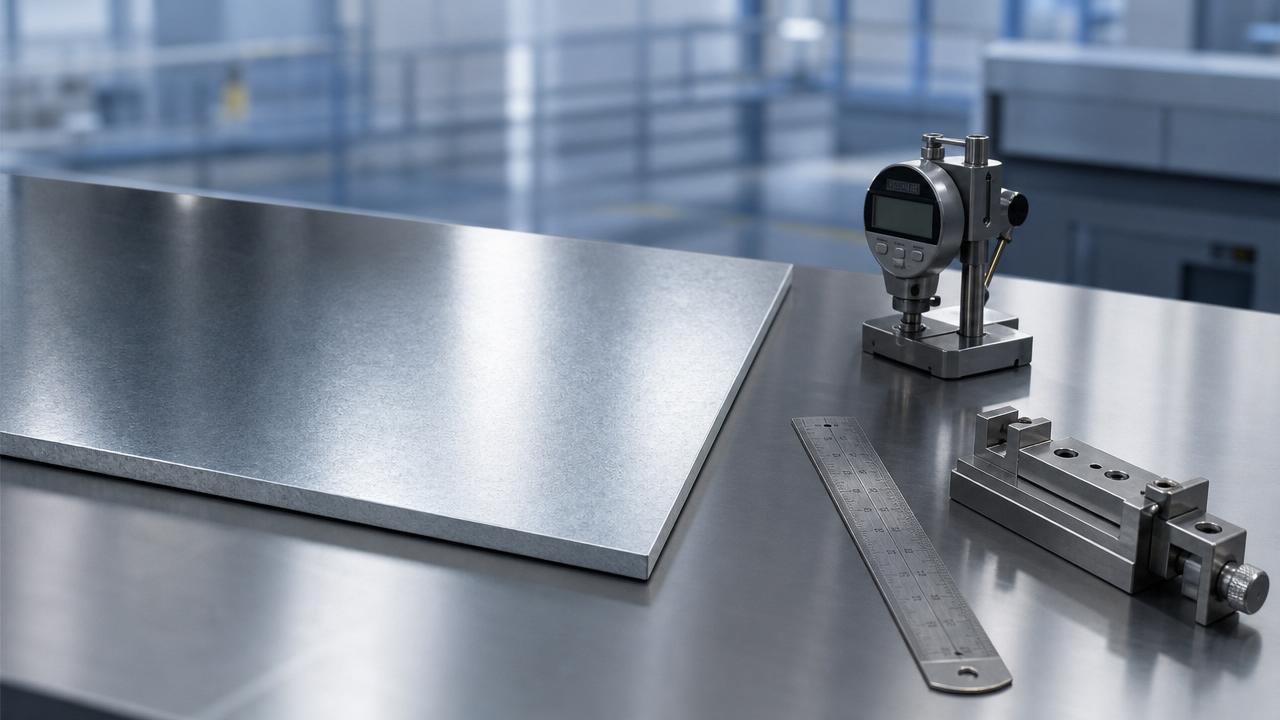
Galvanized flat steel sheet is often judged first by brightness and surface cleanliness, yet visual appeal alone says very little about service reliability. In steel processing, storage, and fabrication, three checks matter far more: zinc coating consistency, sheet flatness, and edge quality. These factors affect corrosion resistance, operator safety, forming stability, and the predictability of downstream work such as cutting, bending, welding, and assembly.
A sheet may look acceptable at delivery and still create problems later. Uneven coating can shorten life in humid or corrosive settings. Poor flatness can disrupt feeding and alignment. Rough or cracked edges can lead to handling injuries, coating loss, and early rust. That is why a practical inspection routine for galvanized flat steel sheet needs to connect appearance with measurable risk.
Why these checks matter in day-to-day steel use
In many industrial environments, galvanized flat steel sheet is selected because the zinc layer provides sacrificial protection. The steel substrate stays protected even when minor surface damage occurs. However, that benefit depends on coating quality, not on the label alone.
Flatness matters for another reason. A sheet that does not lie properly can create feeding errors in decoiling lines, poor contact in fixtures, and dimensional variation after forming. In operations that depend on repeatability, a small wave can become a larger quality issue.
Edge condition is equally practical. It affects slitting safety, stacking stability, manual handling, and the chance of coating fracture near the cut line. In short, these three inspection points sit at the intersection of durability, process control, and workplace safety.
Start with the coating, not just the shine
The zinc coating on galvanized flat steel sheet is the first barrier against corrosion. What matters is not only average coating mass, but also uniformity across the sheet, along the edges, and between lots. A bright finish does not always mean adequate zinc coverage.
What to look for during visual inspection
Surface review should be systematic. Look for color variation, bare spots, dark patches, excessive spangle irregularity, ash deposits, pitting, or streaks. Some visual differences are cosmetic. Others suggest process instability or local coating weakness.
- Bare or dull gray areas may indicate low zinc coverage.
- Long streaks can point to wiping or bath control issues.
- Localized roughness may affect forming and paint adhesion.
- Heavy edge buildup can hide trimming or coating imbalance.
Visual review should also consider where the sheet will be used. Cosmetic marks that are acceptable for concealed structural parts may not be acceptable for exposed panels or painted components.
How coating should be verified
For a dependable decision, surface appearance should be supported by measurement. Common methods include coating thickness gauges, coating mass verification against order specifications, and cross-checking inspection records from the coil or batch.
Measurements should not be taken at only one central point. Test multiple positions across the width and along the length. Variation often appears near edges, coil ends, or areas affected by line speed changes.
When galvanized flat steel sheet is intended for outdoor use, humid interiors, or contact with other metals, small coating deviations deserve closer attention. The exposure level changes the consequence of a minor defect.
Reading flatness beyond a quick glance
A sheet can seem flat when stacked and still behave poorly on the line. Flatness is really about internal stress balance and geometric stability. In galvanized flat steel sheet, waviness may result from rolling conditions, tension imbalance, leveling issues, or uneven coating effects.
Common flatness defects
- Edge wave, where the sides are longer than the center.
- Center buckle, where the middle area rises or loosens.
- Crossbow or coil set, where the sheet curves after uncoiling.
- Twist, where corners do not rest on the same plane.
Each defect influences use differently. Edge wave may interfere with shearing and nesting. Center buckle can reduce die contact. Coil set may cause feeding resistance. Twist can affect robotic handling and fixture seating.
Practical ways to assess flatness
Place the sheet on a known flat reference surface when possible. Check corner lift, edge rise, and visible waviness under normal lighting. For tighter control, use straightedges, feeler gauges, or flatness specifications defined in the purchase standard.
It is also useful to inspect flatness after cutting smaller blanks. Some residual stresses appear only after the sheet is processed. If the part shape changes immediately after slitting or blanking, incoming flatness may be part of the cause.
In production terms, flatness is not only about aesthetics. It influences scrap rate, line speed, operator intervention, and whether downstream dimensions remain stable through forming and assembly.
Edge quality often reveals hidden process problems
The edge of galvanized flat steel sheet deserves close attention because it is both a safety point and a performance indicator. Burrs, microcracks, tearing, and coating flake-off at the edge may signal poor slitting conditions, brittle behavior, or excessive deformation.
What a good edge should show
A sound edge is relatively clean, continuous, and free from dangerous sharp projections. It should not show widespread zinc peeling, deep notches, heavy burr, or jagged fracture patterns that could spread during forming.
This matters especially when the material will be bent, roll formed, or exposed without further edge protection. Edge damage can become the starting point for red rust, coating undercutting, or cut-related injuries during handling.
Typical edge-related risks
- Burrs raise the risk of glove cuts and lacerations.
- Edge cracks may grow during bending or stamping.
- Coating fracture near the cut line reduces corrosion life.
- Jagged slit edges can disturb stacking and automated feeding.
If a batch of galvanized flat steel sheet repeatedly shows edge problems, the review should extend beyond the incoming material. Slitter condition, knife clearance, base steel ductility, and coating adhesion all deserve examination.
Where defects usually create the most trouble
Some defects remain manageable in storage but become serious during conversion. Others seem minor during fabrication and turn into corrosion claims later. The risk depends on the application route.
This is why inspection criteria should match the actual route of use. A simple receiving checklist is more effective when it reflects forming severity, environmental exposure, and handling frequency.
Building a more reliable inspection routine
A practical control plan for galvanized flat steel sheet does not need to be complicated, but it should be consistent. The goal is to catch meaningful variation early enough to prevent rework, claims, and avoidable safety exposure.
Useful checkpoints to standardize
- Confirm coating specification against order and applicable standard.
- Inspect multiple positions, not one representative spot.
- Record visible defects with location and frequency.
- Separate cosmetic concerns from functional rejection points.
- Check edges after unwrapping, not only while bundled.
- Review flatness under the same condition used in processing.
Traceability also helps. Coil number, supplier lot, production date, and test records make it easier to decide whether an issue is isolated or repeated. Without traceability, similar problems tend to be rediscovered rather than corrected.
Another useful step is linking inspection outcomes to downstream performance. If certain coating patterns correlate with poor paint adhesion, or if specific flatness deviations lead to feeder stops, the incoming criteria can be sharpened with real evidence.
What to review before accepting the next batch
Before approving a new shipment of galvanized flat steel sheet, it helps to ask a few grounded questions. Is the coating level suitable for the exposure environment? Will the flatness support the planned process without extra leveling? Are the edges safe and stable enough for handling and forming?
Those answers are more useful than a general impression of surface quality. In steel applications, reliable material control comes from matching inspection detail to actual use conditions. When coating, flatness, and edge quality are checked together, acceptance decisions become clearer and later surprises become less frequent.
For the next review cycle, it is worth comparing current inspection records with processing results, corrosion exposure, and incident reports. That comparison often shows where galvanized flat steel sheet requirements should be tightened, clarified, or adjusted for the real operating environment.
Get real-time quotes
Interested? Leave your contact details.