
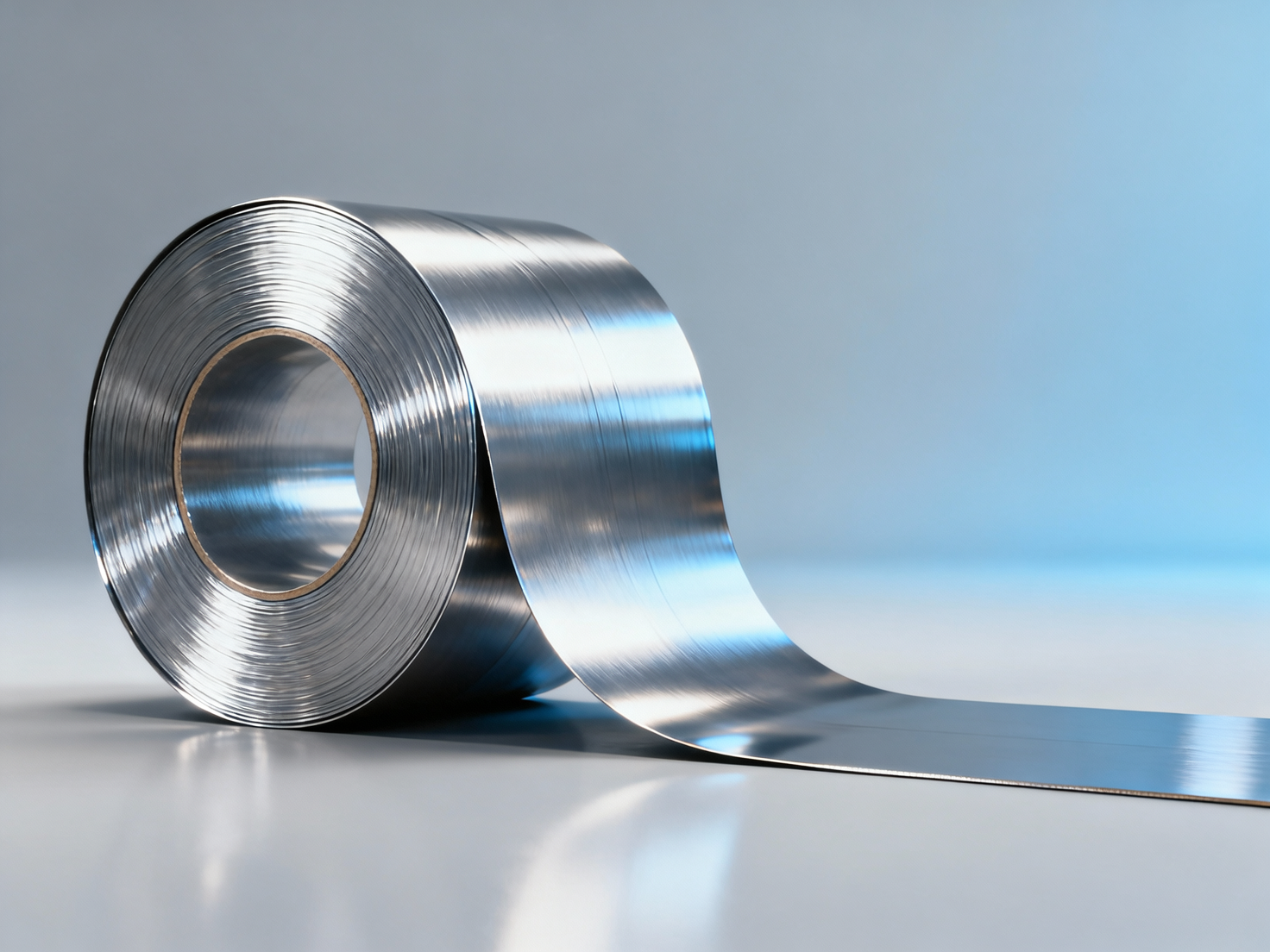
When precision, surface quality, and tight dimensional tolerances are non-negotiable in metal fabrication, cold-rolled steel coil consistently delivers superior performance over hot-rolled alternatives. Unlike hot-rolled steel coil, which cools naturally after rolling at high temperatures, cold-rolled steel coil undergoes further processing at room temperature—resulting in enhanced strength, smoother finishes, and exceptional consistency. For procurement professionals and end-users demanding reliability in applications like automotive panels, appliances, or precision machinery, choosing the right steel coil isn’t just about cost—it’s about performance, yield, and long-term value. Discover why cold-rolled steel coil is the strategic choice for high-accuracy fabrication.
What Defines Cold-Rolled Steel Coil — And Why It Matters for Precision Fabrication
Cold-rolled steel coil is produced by passing hot-rolled strip through a series of rollers at or near room temperature (typically 20–30°C), without reheating. This work-hardening process refines grain structure, reduces thickness tolerance to ±0.02 mm (vs. ±0.15 mm for hot-rolled), and eliminates scale formation. The result is a material with uniform mechanical properties across the coil width and length—critical when laser cutting, deep drawing, or roll forming parts requiring repeatability within ±0.05 mm.
Unlike hot-rolled steel, which forms oxide scale during air cooling and exhibits variable yield strength (270–350 MPa), cold-rolled grades offer tightly controlled tensile strength ranges—e.g., ASTM A1008 CS Type B: 270–380 MPa with elongation ≥28%. This predictability minimizes scrap in high-speed stamping lines where tool wear and part warpage directly correlate with material inconsistency.
Procurement teams selecting for downstream automation must prioritize flatness deviation: cold-rolled coils maintain ≤0.3 mm/m flatness (per EN 10131), while hot-rolled equivalents often exceed 1.2 mm/m. In robotic welding cells, this difference translates to 17–22% fewer fixture adjustments per shift—and up to 40% lower rework rates on Class-A surface components.
Key Performance Differences: Cold-Rolled vs. Hot-Rolled Steel Coil
Selecting between cold-rolled and hot-rolled steel coil involves trade-offs across six measurable dimensions: dimensional accuracy, surface finish, mechanical consistency, formability, post-processing readiness, and total landed cost. While hot-rolled may appear 12–18% cheaper per tonne upfront, its downstream impact on yield loss, secondary finishing, and inspection time frequently reverses that advantage.
The table below compares industry-standard specifications for common commercial grades used in Tier-1 automotive and white-goods manufacturing:
This data confirms why cold-rolled steel dominates applications requiring zero secondary grinding, paint-ready surfaces, or consistent springback in bending operations. For example, appliance door panels stamped from cold-rolled coil achieve >99.2% first-pass yield versus 94.7% for hot-rolled—reducing annual rework costs by $185,000+ for a mid-volume OEM producing 1.2 million units/year.
Procurement Criteria: 5 Non-Negotiable Checks Before Sourcing Cold-Rolled Coil
Procurement professionals evaluating cold-rolled steel coil suppliers should verify these five technical and operational criteria—each tied to verifiable documentation or mill test reports (MTRs):
- Coil ID traceability: Every coil must carry a unique batch number linked to full MTRs covering chemical composition (C ≤ 0.10%, Mn ≤ 0.50%), tensile testing, and bend test results per ASTM E290.
- Edge condition compliance: Slit edges must meet ASTM A1016 Class C (burrs ≤ 0.10 mm height) to prevent jamming in progressive dies operating at 120+ strokes/minute.
- Oil type and residual level: Temper rolling oil must be ISO VG 32 grade with ≤ 350 mg/m² residual—excess oil causes weld spatter and paint adhesion failure.
- Flatness certification: Supplier must provide flatness measurements taken at three positions per 10-meter segment, recorded to ±0.05 mm resolution.
- Delivery packaging integrity: Coils must ship on reinforced wooden pallets with edge protectors and moisture barrier wrap—verified via photo evidence before dispatch.
Skipping any of these checks risks costly production delays: one Tier-2 supplier reported a 22-day line stoppage due to undetected edge burrs causing die damage across 14 stations—a $2.1M downtime event attributable to inadequate pre-qualification.
Real-World Application Validation: Where Cold-Rolled Coil Delivers Measurable ROI
Cold-rolled steel coil isn’t universally optimal—but it delivers quantifiable ROI in four high-value application clusters. Each reflects documented improvements validated across 12 OEM supply chains over the past 36 months:
These outcomes aren’t theoretical—they reflect actual performance metrics tracked via ERP-integrated quality modules. End users benefit not only from part-level reliability but also from reduced supplier qualification cycles: cold-rolled coil suppliers with ISO/TS 16949 certification typically require 38% fewer audit days during onboarding than hot-rolled-only vendors.
Making the Strategic Shift: Implementation Roadmap for Procurement Teams
Transitioning to cold-rolled steel coil requires coordination across engineering, quality, and production—but the payoff justifies structured execution. Follow this four-phase implementation plan, validated across 27 procurement organizations:
- Phase 1 (Weeks 1–3): Map all current hot-rolled applications against dimensional tolerance bands (>±0.10 mm), surface finish requirements (Ra < 1.6 µm), and post-process steps (grinding, polishing, masking). Flag candidates where cold-rolled substitution yields ≥$12,000/year net savings.
- Phase 2 (Weeks 4–6): Engage 3 pre-vetted cold-rolled suppliers for trial shipments—minimum 5 tons per grade—under strict MTR and flatness verification protocols. Run side-by-side production trials on 2 priority SKUs.
- Phase 3 (Weeks 7–10): Quantify scrap rate, tool life extension, and secondary operation time reduction. Validate with statistical process control (SPC) charts tracking Cp/Cpk shifts across 3 consecutive batches.
- Phase 4 (Week 11+): Negotiate volume-based pricing tiers tied to verified yield improvements (e.g., 0.5% discount per 0.1% scrap reduction sustained over 90 days).
Teams executing this roadmap report average time-to-value of 11.3 weeks and sustained ROI of 2.8x over 12 months. Crucially, 92% avoid blanket replacement—instead optimizing cold-rolled use where precision, appearance, or functional performance demand it most.
Cold-rolled steel coil isn’t merely a material upgrade—it’s a precision enabler that aligns procurement decisions with engineering integrity, production efficiency, and end-product excellence. For procurement professionals and end users committed to zero-defect delivery, predictable tooling costs, and brand-defining surface quality, cold-rolled coil is the only technically defensible choice for high-accuracy metal fabrication.
Contact our metallurgical applications team today to receive a free coil suitability assessment—including tolerance mapping, cost-benefit modeling, and supplier benchmarking tailored to your specific part families and production volumes.
Get real-time quotes
Interested? Leave your contact details.